Skip to content

Archive for

#acwri: tweeting academic writing

I’ve recently discovered something in Twitter: people use the social media not only to share links to interesting stuff, to discuss with other people or to comment on anything and everything: they also use it to talk about academic writing. A growing number of people are adding the hashtag #acwri to  their tweets when they are talking about academic writing.

acwri

Based on my at home and non scientific inquiry into the use of this hashtag, I’ve discovered that mainly four kind of tweets use it: Read more

It’s about puzzles, not gaps: An interview with Karen Golden-Biddle

Karen Golden-Biddle

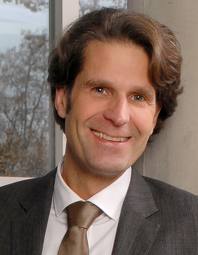
Karen Golden-Biddle; Senior Associate Dean and Everett W. Lord Distinguished Faculty Scholar at Boston University School of Management

Karen must be one of the most generous and kind people I’ve met in academia. Even though she doesn’t know you, she has this knack of talking to you and engaging with you as if you were an old friend. You are immediately at ease, and if you don’t watch yourself, you might just start spelling out your whole life story to her. Which, I’m sure you all will agree, is not really a good thing when you are interviewing someone.  This interview is a bit of a special case. Although it reads as a single interview, in truth it is a reconstruction of several conversations Karen and I had over several months, some recorded and transcribed and some not. Some of it even comes right out of the comments Karen made as one of the speakers in our Publishing Qualitative Research workshop (which you can see on video on this blog). There are many instances where Karen will talk about the writing process (she did a write a book on the topic, after all!), and I’ve been fortunate enough to be on the listening end of those moments on several occasions. So although our “formal” interview for this blog lasted well over an hour, I was not happy with it in the end. And nor was Karen. There was just so much to talk about, and the hour long interview we did ended up missing out on too much of the richness I felt I had gotten from these other instances of talking with and listening to her. So I did a bit of creative collating, and this is what you get. This is all Karen. Just not all Karen in one sitting. I hope you like it!

Read more

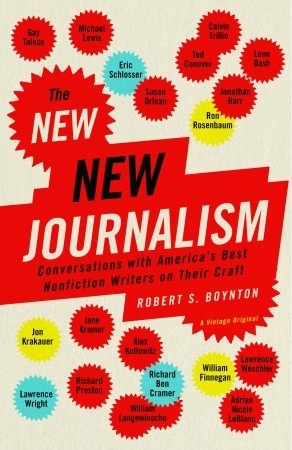
The New New Journalism by Robert S. Boynton

NNJ

Some books, they say, can change lives.

They inspire, they urge, they provoke, they push, they rescue, they save. Sometimes, they open a way. Other times, they help close a chapter. “The New New Journalism” by Robert Boynton did not change my life but it has transformed my views on what kind of research I should be doing, how I should be writing and most importantly, on why it was -and still is- so vital for me.

I have come across this book while browsing overflowing dusty shelves in the famous “Strand” bookshop in New York City. I was a few blocks away from New York University where Robert Boynton teaches journalism and is the Director for the Literary Reportage concentration. I had been interested in journalism for ages, since those snowy days spent reading John Reed’s autobiography in a Montreal café. I had started reading and collecting books on journalism from then on and as these books gradually piled up on my bookshelves, I developed a strong affection for them (the actual material objects that had travelled thousands of miles with me) and for their authors who made me realize how much I wanted to write and how hard I knew it to be. Read more

The relationship between theory and carpets: An interview with David Seidl

David Seidl

David came to HEC as a guest in March 2011, which is when the interview featured here took place. These were still early days as far as our blog idea was concerned, and as with Sarah, we started by interviewing our friends first. David is a long-standing member of the strategy-as-practice community of which all three of us are a part. We knew he’d not only oblige, but would be happy to contribute to anything that might help people figure out how to write better papers (even if it meant revealing to the world that he has a ping-pong table in his office and that he reads his drafts out loud to himself such that anyone passing by his open office door can hear him!) This interview is also interesting because David tends to write theory papers, and the process for writing those is a bit different from that of writing empirical papers. Personally, I found David’s explanation about getting the “line of argument” right particularly insightful. Much of the work we do is about telling a compelling, believable story about how things work in this great, big world that we inhabit, or in other words, getting “the line of argument right.” So roll out that carpet everyone, and make sure there are no more ripples in it when you’re done. (Read on, and you’ll understand!)

Read more

Using Scrivener in research, part 1

I’ve known about Scrivener for more than four years. In fact, this application is one of the reasons why I switched to Mac and bought a MacBook in the fall of 2008. Scrivener is an application that was developed to help writers with their projects. Initially created for fiction writers (and Mac users!), it has also since then been adopted by non-fiction writers, journalists and researchers alike… and is now available for Windows too. My first experiences with Scrivener were in developing ideas for short stories. But the more I played with the software, the more I became convinced that it would make a great research tool. I’ve tried to use it in research projects before, but I never used it from the beginning of a project… until recently. Some weeks ago, I started a new research project and I decided that this would be the occasion I was waiting for. I also decided that I would share my experience with you over the next months. Read more

Beautiful libraries and bookstores

I love libraries. I used to spend a lot of time working at libraries – I even had a job at my public library when I was an undergrad! Nowadays, I do most of my work from my office or from home, but I still try to go work in a library setting once in a while. My office is very close to the Grande Bibliothèque – the national library of Québec, and it’s an amazing place to read or work. Maybe someday I’ll devote a post to this library… but in the meantime, here are pictures of other very cool libraries and bookstores found around the world. Enjoy!

http://www.thecoolist.com/book-lovers-paradise-10-amazing-bookstores-around-the-world/

Montreal graffiti

IMG_4911

Montreal streets and buildings are frequently the medium for outstanding street art.  In my spare time, I photograph those I find most beautiful or inspiring.  As a respite from writing, I thought I might post a few here for you to enjoy.

Writing as a social activity: An interview with Nelson Phillips

Nelson Phillips2

Nelson and I have known each for quite a long time. Prior to undertaking a career in academia, I worked in university administration. I was an administrator at McGill University when Nelson first started working there and we both sat on the faculty’s strategic planning committee. He was always very friendly (and still is!) and we sort of stayed in touch all through my graduate studies even though I was pretty much a nobody within academia and he was the much-admired rising star. When I moved to the UK to do my post doc at Oxford, Nelson introduced me to various people, which considerably facilitated my integration into the academic community there. So naturally, when my co-authors and I came up with the idea of interviewing academics on their writing habits, Nelson was one of the first people I thought of approaching. This interview took place over a noisy and crowded lunch at Imperial College. We were a bit pressed for time, so I could not ask Nelson all the questions I would have liked to. But I think our chat makes for a most interesting interview nevertheless (especially the writing collectively bit, which was quite the revelation for me! It would never have occurred to me to write with others in that way). Some months later I also interviewed Nelson’s good friend and frequent co-author Tom Lawrence – readers might enjoy reading that interview as well (I’ll be posting that one soon), as it provides an interesting “other side of the coin” take on some of the stories being told here.

Read more

Using theater as a tool: An interview with Annabel Soutar

Annabel Soutar

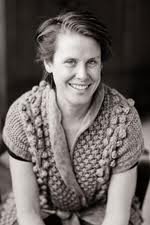
Annabel Soutar, Playwright and Executive Director, Porte Parole

Porte Parole is a documentary theater company based in Montreal. For those unfamiliar with the genre, documentary theatre is a type of theatre that looks at current social issues and presents them in dramatic form. The script of a documentary play is the outcome of an investigative process aimed at shedding light on a given issue from a variety of perspectives. The script itself is usually written using verbatim excerpts from interview transcripts with respondents as well as other documents, such as newspaper clippings, government reports, court proceedings, etc. In some ways, one might say that documentary theater is at a crossroads between investigative journalism and art. For those of you interested in finding out more about this wonderful theatre company, you can have a look at their website: http://www.porteparole.org.

I came across Annabel’s work for the first time in 2003, when an acquaintance told me about a play her theater company, Porte Parole, had just produced. I had been working for a foundation at the time, whose mission was to build a centre of excellence in nursing in Montreal, and the play was about… nurses. It was in fact one of a seven-part series of plays on the Quebec health care system. I’d never heard of Porte Parole before, nor had I ever heard of documentary theater as a genre, but I was curious, and so I went. It was a mesmerizing experience. I had just spent the previous months trying to make sense of the field of nursing – what the issues were, where the challenges for development lay. I had spoken with existing and former politicians and civil servants in the Ministry of Health. I had met the Deans of Schools of Nursing, as well as the Directors of Nursing in most of Montreal’s major hospitals. I had spoken to the President of the Order of Nurses as well as members of her staff I had had conversations with nurses working in all kinds of roles, in all levels of our health care system (head nurses, hospital-based nurses, nurses in private practice, community health nurses, etc.). I had a pretty good understanding of what was going on, and I can honestly say that Annabel had pretty much nailed all the main issues in her hour-long play. I became an instant fan.

Read more

Publishing Qualitative Research Video

In June 2012 a small group of us hosted a workshop on how to publish qualitative research in top journals. We invited a roster of editors from top journals in our field, and invited them to come to HEC and demystify the publishing process for the rest of us. The workshop was broken down into two parts – in the first part, both author and editor discuss their respective experiences in getting a paper through the review process at AMJ (The Academy of Management Journal). In the second part, our roster of editors comment on two burning questions about publishing qualitative research (well, they seemed “burning” to us, given that we thought them up!):

  • What is the literature review suppose to do in a qualitative paper?
  • When and why does an R&R not make it?

Read more